




MPE — MIDI Polyphonic Expression
Every note, expressed individually.
MIDI Polyphonic Expression (MPE) lets artists perform independent gestures on every note they play, in three dimensions of touch. Every note can bend, swell, and evolve on its own — leading to more human, more emotionally engaging performances.
What is MPE?
One channel per note. Three dimensions per finger.
MPE — MIDI Polyphonic Expression — is an official extension of MIDI 1.0, ratified by the MIDI Manufacturers Association in January 2018. It is a set of conventions that give each note its own MIDI channel, so that pitch bends, pressure, and timbre changes apply to individual notes instead of to everything at once.
Classic MIDI has a blind spot: on a single channel, Pitch Bend and Control Change messages apply to every sounding note. Bend one note of a chord and the whole chord bends. MPE solves this with one simple move — each note gets its own channel — so a controller can send independent expression for every finger on the surface.
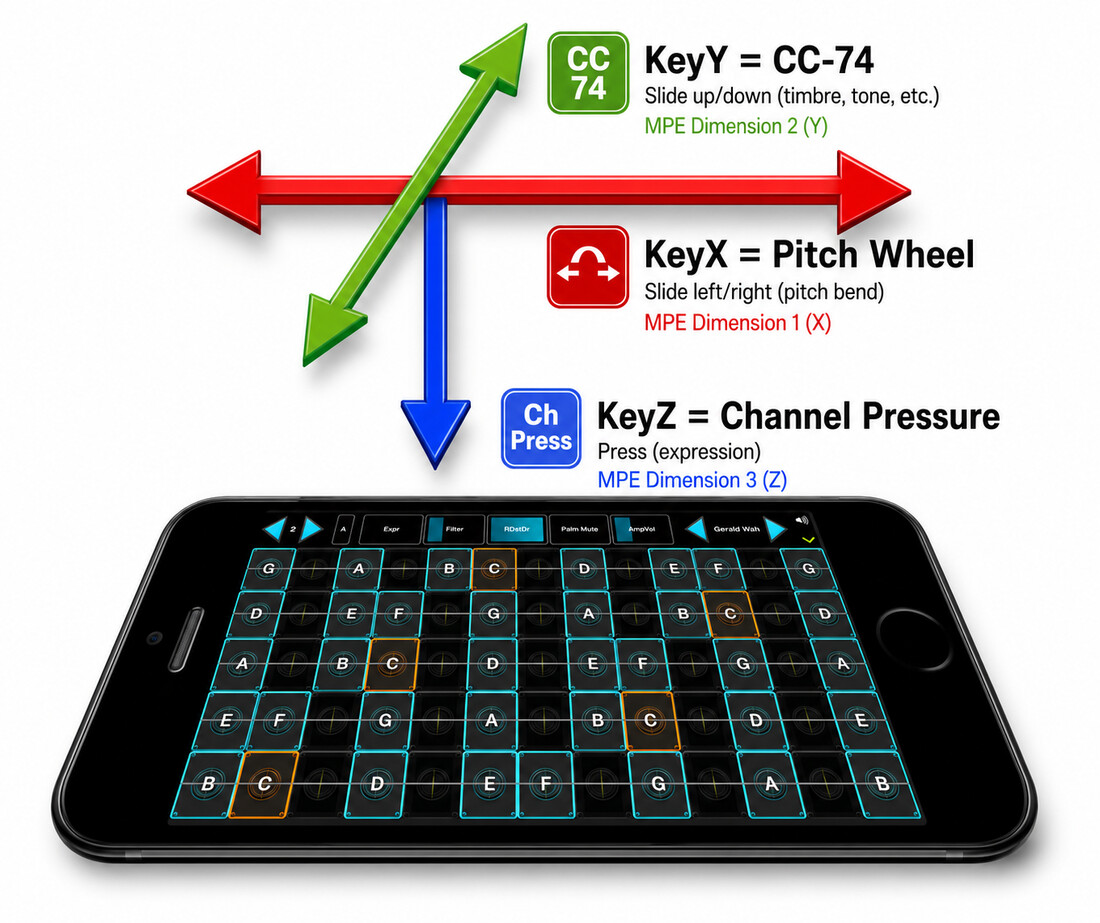
The five messages of MPE
Note On Velocity
How hard the note starts.
Side to side
Per-note pitch glides, vibrato, and bends.
Front to back
Timbre and brightness, per note.
Downward pressure
The primary expressive control.
Note Off Velocity
How the note is released.
KeyX / KeyY / KeyZ are moForte’s vendor-neutral names. Roger Linn, Haken, and Roli each name the same messages differently — see the comparison table below.
Two ways to organize channels
Channel-Per-Note (MIDI Mode 3) suits keyboard-style instruments like the Seaboard and Osmose: each new touch takes the next free channel. Channel-Per-Row (MIDI Mode 4) suits string-layout instruments like GeoShred, the LinnStrument, and guitar controllers: each row (string) keeps its own channel — the same trick MIDI guitars have used for over 35 years. A Manager Channel (typically 1 or 16) carries global messages — a mod-wheel gesture, say — to all member channels at once, and MPE provides a low/high split so two zones can coexist, each with its own Manager Channel.
Why it matters beyond keyboards
Pitch fluidity — the continuous, sliding pitch of the human voice, the sitar, the erhu, the slide guitar — is essential to musical traditions around the world. MPE addresses it directly with per-note, multi-octave pitch bending. South Asian music in particular simply cannot be played convincingly without it — a big part of why we built GeoShred and the Naada instruments on MPE from the start.
Today MPE is supported by well over 200 hardware and software products — see the product guide below.
MPE Roots
The idea is older than the name.
-
1980s
MIDI guitar controllers pioneer channel-per-string — one MIDI channel per guitar string, so each can bend independently. MPE’s core trick, decades early.
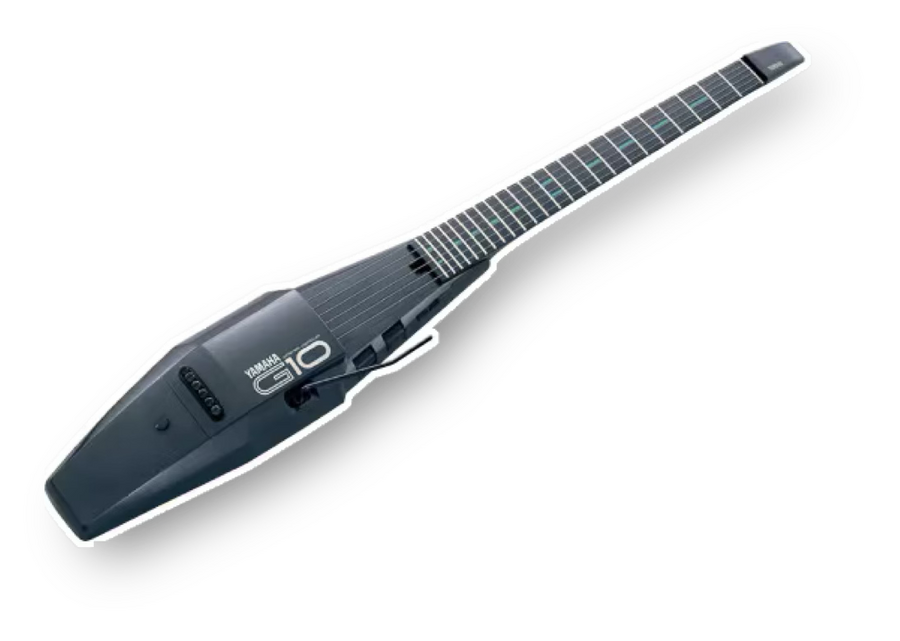
The Yamaha G10 MIDI guitar controller. -
1999
Lippold Haken’s Continuum Fingerboard ships continuous x|y|z control — per-note pitch, timbre, and pressure from a single fretless surface (in development since 1983).
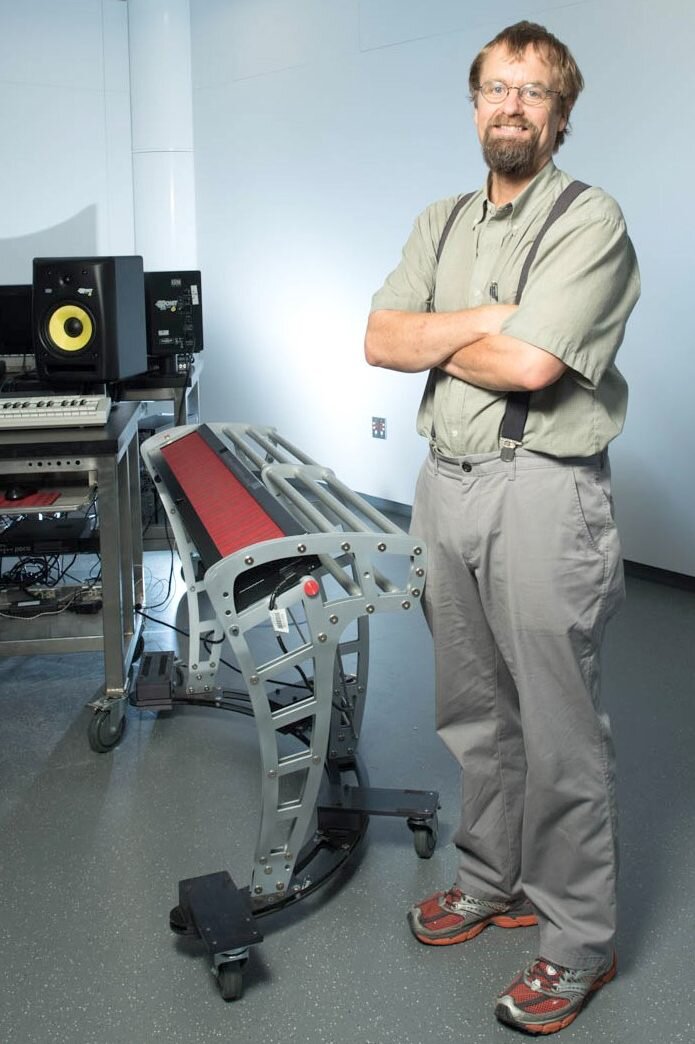
Lippold Haken with the Continuum Fingerboard. -
2009
Eigenlabs’ Eigenharp brings highly sensitive, multidimensional keys to a performance instrument.
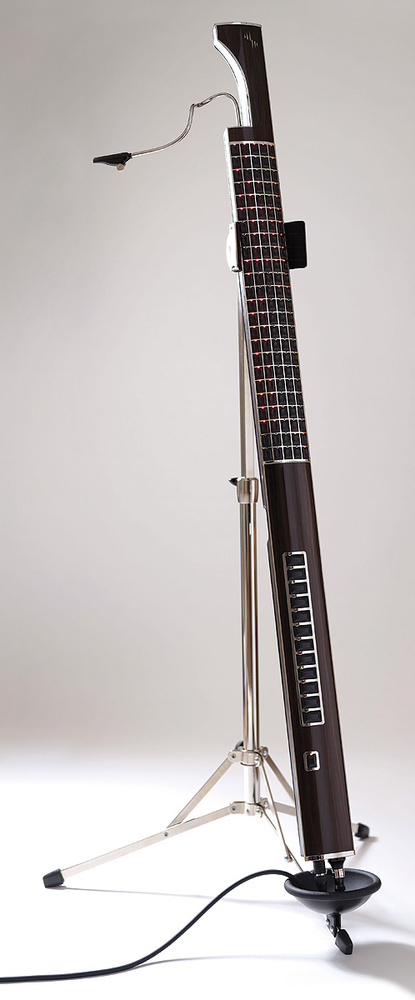
The Eigenharp Alpha. -
2010–2014
Keith McMillen’s kBow and AIM explore multidimensional expressive control for strings.
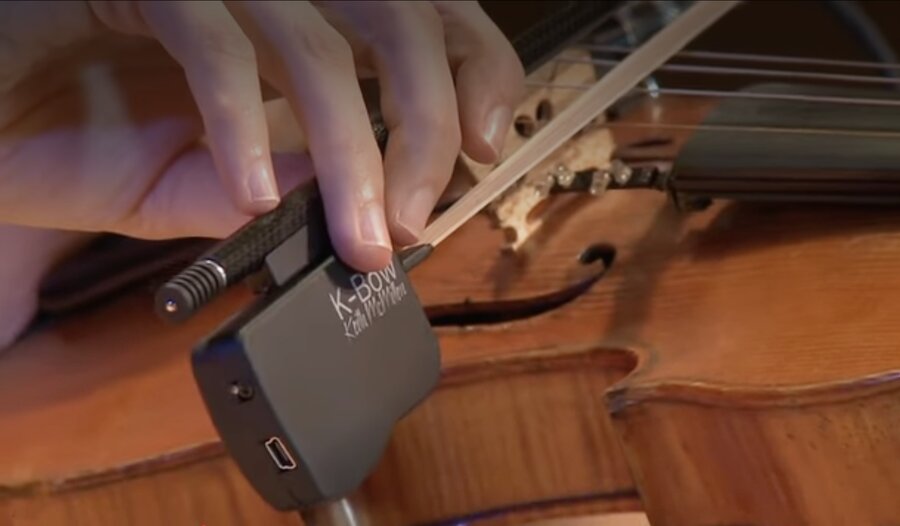
The Keith McMillen K‑Bow. -
2014
Roger Linn and Geert Bevin’s LinnStrument becomes one of the first instruments to implement what would become MPE — channel-per-row, with five dimensions of touch.
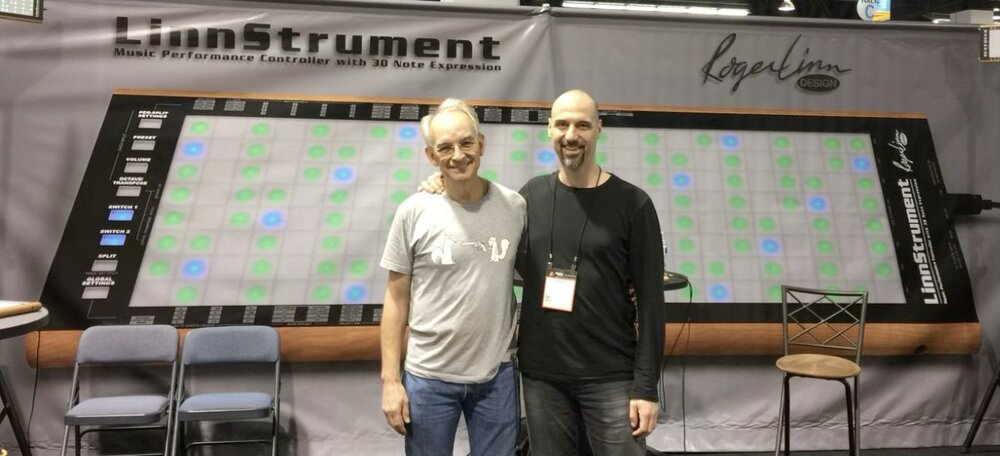
Roger Linn and Geert Bevin. -
2014
Roland Lamb’s Roli Seaboard adopts the same approach, bringing per-note expression to a keyboard-shaped soft surface.
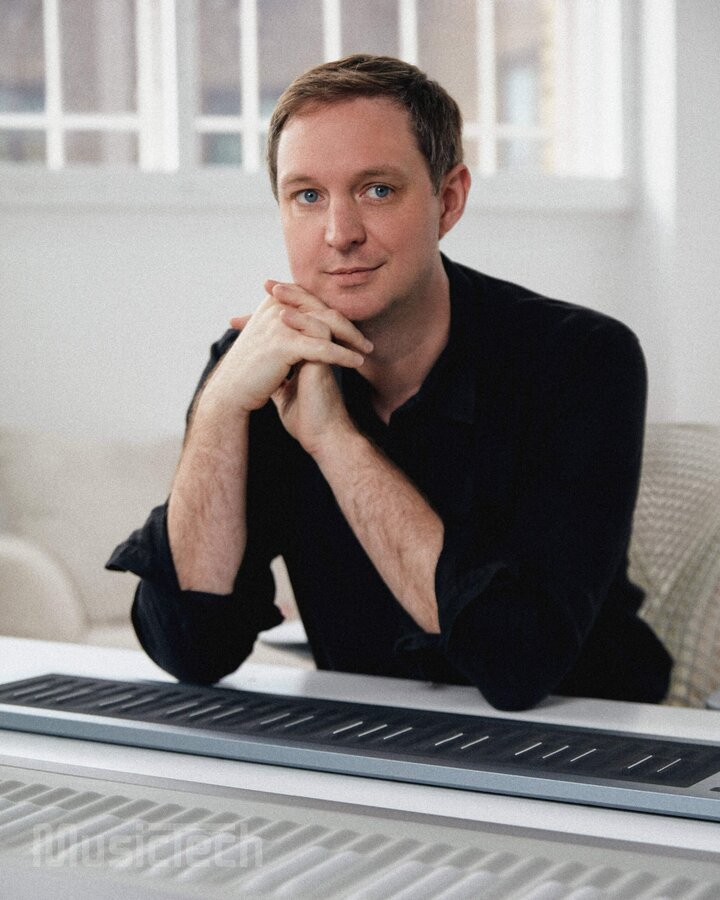
Roland Lamb with the Seaboard. -
2015
At Winter NAMM, hardware and software makers — Apple, Bitwig, Haken Audio, Keith McMillen Instruments, Madrona Labs, Moog, Roger Linn Design, Roli, and others — begin standardizing multidimensional control as MPE.
-
Jan 2018
MPE is ratified as an official MIDI extension by the MIDI Manufacturers Association.
-
May 2022
MPE 1.1 — a clarification revision that resolves every known point of confusion in the original spec. The working group is chaired by moForte’s Pat Scandalis.
-
Apr 2024
The MPE Profile for MIDI 2.0 is adopted — the story continues below.
Photos from moForte’s ADCx San Francisco 2023 presentation.
MPE in MIDI 2
MPE has been called the bridge between MIDI 1.0 and MIDI 2.0.
MIDI 2 changes MIDI from a monologue to a dialog: senders and receivers negotiate over MIDI-CI (Profiles, Property Exchange, Process Inquiry). The new Universal MIDI Packet carries MIDI 1 and MIDI 2 messages with automatic translation between them, and the numbers jump: 256 channels, 32-bit controller resolution, 64K velocity levels, and native per-note controllers. Operating-system support — Apple, Windows, Linux, Android — landed in 2024.
What the MPE Profile changes (April 2024)
MPE on MIDI 1.0 (2018)
- Configured with the MCM message (RPN 6)
- Fixed Lower/Upper Zones split the channel space
- Manager Channel must be 1 or 16
- Sender assumes what the receiver can do
The MPE Profile (2024)
- Configured by MIDI-CI Profile Negotiation
- Zones are gone — enable multiple profiles instead
- Any base channel can be the Manager Channel
- Receiver-centric: the receiver reports its channel range, the sender adapts
How devices negotiate
- Initiator sends a Profile Inquiry
- Responder replies to the Profile Inquiry
- Initiator requests a number of channels (and a base channel)
- Responder replies with Profile Details — the maximum channels it supports
- Initiator sends Set Profile On with the desired channel count
- Responder confirms: Profile Enabled
- MPE communication begins
The bonus: easy migration to MIDI 2. If a MIDI 1 MPE device replaces the MCM with Profile Negotiation, it is fully MIDI 2 compliant and can operate in the MIDI 2 environment — even while speaking MIDI 1.
— moForte, “MPE/MIDI 2 for Instrument Creators,” CCRMA Open House 2024
The Case for Generative Music and MPE
White paper coming soonGenerative and AI-assisted music can compose notes — but expression is what makes notes music. We’re writing a white paper on why per-note, three-dimensional expression is the missing ingredient in generative music, and how MPE provides the vocabulary for it. A distilled version will live here.
MPE Products
A verified guide to the MPE ecosystem, in the order the products arrived. Last verified: July 2026.
Ordered by introduction year. (discontinued) items remain — much of this gear lives on used markets and on stage.
Swipe sideways to see the full table.
| Introduced | Product | Maker | Notes |
|---|---|---|---|
| 1999 | Continuum Fingerboard | Haken Audio | The original x|y|z instrument (in development since 1983); internal EaganMatrix synth; hi-res “MPE+”. Current models: Slim21 / Slim46 / Slim70. |
| 2009 | Eigenharp | Eigenlabs | Multidimensional keys; MPE via EigenD software. Legacy, small-batch. |
| 2011 | Soundplane | Madrona Labs | Walnut multi-touch pressure surface; raw USB data becomes MIDI/OSC via its Mac client, driving Madrona’s synths directly. (production ended) |
| 2012 | QuNeo | Keith McMillen Instruments | 16-pad controller with velocity, pressure, and X‑Y per pad; MPE via the free QuNeo MPE app. (discontinued) |
| 2013 | Seaboard GRAND | ROLI | The original soft-silicone keywave surface. (discontinued) |
| 2013 | QuNexus | Keith McMillen Instruments | 25 mini keys; per-note expression via channel rotation. |
| 2014 | LinnStrument / LinnStrument 128 | Roger Linn Design | 200/128-pad grid, five dimensions of touch; among the first true MPE instruments. Still in production. |
| 2014 | Modal 001 / 002 / 002R | Modal Electronics | Early MPE receivers via a free 2017 OS update. (discontinued) |
| 2015 | NF-1 | Modor | Digital poly, MPE-compatible; the NF-1m mini is out of production. |
| 2015 | Shuttle Control | Endorphin.es | Pioneering MPE-enabled USB-MIDI-to-CV. (end of line) |
| 2015 | Parva | Futuresonus | One of the first MPE analog polysynths. (company defunct) |
| 2015 | Axoloti | Axoloti | Open patchable DSP board with MPE mode; community successor Ksoloti carries it on. (discontinued) |
| 2015 | Instrument 1 | Artiphon | Strum, bow, tap — multi-method MPE controller. (discontinued) |
| 2015 | Seaboard RISE | ROLI | Brought the Seaboard to a wider market; superseded by RISE 2 / Seaboard 2. |
| 2016 | BLOCKS / Lightpad | ROLI | Modular touch surfaces. (discontinued) |
| 2016 | MicroMonsta / MicroMonsta 2 | Audiothingies | Desktop synth with MPE since 2017 firmware; MicroMonsta 2 (2021) is batch-built. |
| 2016 | GeoShred (iPad) | moForte | An MPE controller running on iPad hardware: GeoShred 2 turned any iPad into a full channel-per-row MPE controller over USB / Wi‑Fi / Bluetooth MIDI — playing desktop synths, DAWs, and hardware. |
| 2016 | DM48 / DM48X | Lekholm Instruments | Digital harmonica: per-hole breath sensors with multichannel/MPE output; the DM48X is current. |
| 2017 | Seaboard Block | ROLI | Portable 24-keywave surface; today’s Seaboard M. |
| 2017 | Sensel Morph | Sensel | Swappable-overlay pressure surface. (discontinued 2022) |
| 2017 | Joué Board / Play / Pro | Joué Music | Modular overlay controller. (company closed Dec 2024) |
| 2017 | Deckard’s Dream | Black Corporation | CS-80-inspired 8-voice; the MK2 adds full MPE per layer. |
| 2017 | SSP | Percussa | Eurorack DSP flagship; MPE receiver (compact XMX sibling, 2024). |
| 2017 | Poly / Poly 2 | Polyend | MPE-capable MIDI-to-CV Eurorack modules. (discontinued) |
| 2017 | BopPad / BopPad Galaxy | Keith McMillen Instruments | 10″ four-zone MPE drum trigger pad; the Galaxy version is current. |
| 2018 | ContinuuMini | Haken Audio | Compact, affordable Continuum. |
| 2018 | K-Board Pro 4 | Keith McMillen Instruments | 48 keys with per-key tilt and slide. |
| 2018 | Kijimi | Black Corporation | 8-voice analog poly with MPE and microtuning; MK2 shipping now. |
| 2018 | FH-2 | Expert Sleepers | MIDI/MPE-to-CV module: up to 16 MPE touches, each with its own CVs. |
| 2019 | Hydrasynth family | ASM | MPE in/out since firmware 1.3 (2020); the keybed itself is polyphonic aftertouch. |
| 2020 | Jamstik Studio / Deluxe / Standard | Zivix | MIDI guitars sending per-string MPE; all three models current. |
| 2020 | EaganMatrix Module | Haken Audio | The Continuum’s synth engine in Eurorack; MPE receiver. |
| 2021 | Erae Touch / Erae II | Embodme | Customizable LED pressure surface; Erae II (2025) adds a looper and CV outs. |
| 2021 | Striso Board | Striso | Isomorphic button board; microtonal-friendly per-note bending. |
| 2022 | Seaboard RISE 2 (now Seaboard 2) | ROLI | Refined keywaves with “precision frets”; renamed Seaboard 2 in 2025. |
| 2022 | Orba 2 | Artiphon | Handheld MPE synth/looper; Chorda followed in 2023. |
| 2023 | Osmose | Expressive E | Full-size keys with per-key 3D expression; internal EaganMatrix. 61-key (2025); controller-only Osmose CE (2026). |
| 2023 | Exquis | Intuitive Instruments | 61 hexagonal pads; the most affordable true MPE controller. |
| 2023 | Push 3 / Push 3 Standalone | Ableton | 64-pad MPE grid, standalone or tethered. |
| 2023 | Keystage 49 / 61 | Korg | Poly-aftertouch keyboard with official MPE support — and the first with MIDI 2.0 Property Exchange. |
| 2024 | wavestate / opsix / modwave (mkII & modules) | Korg | MPE + MIDI 2.0 Property Exchange added in the 2024 updates. |
| 2024 | PolyBrute 12 | Arturia | MPE receiver with the FullTouch full-travel expressive keybed. |
| 2025 | Piano M | ROLI | Illuminated-key MPE piano system. |
| 2025 | Protein | Waldorf | Desktop synth, MPE receiver. |
| 2026 | Dog Paw | Dog Paw Music | The first weighted grid instrument — piano-like key resistance on an MPE grid, with a standalone internal sound engine (Best of NAMM ’26; first run ships late 2026). |
Worth knowing: Expressive E’s Touché is a superb gestural controller but monophonic — not per-note MPE. Two 2018-era list regulars never actually shipped MPE: the MOD Duo (MOD’s own FAQ says no plugin on the platform supports it) and Vermona’s PerFOURmer (4-part multitimbral, not MPE). Likewise, SOMA’s Terra and the Snyderphonics Manta are wonderfully expressive but document no MPE support.
Ordered by when MPE support arrived (≈ approximate where marked “~”).
Swipe sideways to see the full table.
| MPE since | Product | Maker | Notes |
|---|---|---|---|
| 2014 | Bitwig instruments | Bitwig | Polymer, Polysynth, The Grid… per-note expressive at the engine level since Bitwig 1.0. |
| 2015 | Equator / Equator2 | ROLI | MPE-native from day one; Equator2 (2020) is the flagship. |
| 2015 | Kyma | Symbolic Sound | Sound-design environment (with Symbolic Sound DSP hardware); plug-and-play MPE since Kyma 7 — one of the earliest adopters. |
| 2015 | PPG plugins (WaveMapper 2, WaveGenerator, Phonem, Infinite Pro) | Wolfgang Palm | MPE-capable wavetable line, withdrawn after Palm’s 2020 retirement. (discontinued) |
| 2016 | Max | Cycling ’74 | First-class MPE objects (mpeparse, mpeformat) for building your own MPE instruments. |
| 2016 | Modular | Softube | MPE via the bundled ROLI Seaboard RISE module (38 CV outs). |
| ~2016 | Falcon | UVI | Deep hybrid sampler/synth; MPE support and per-note modulation throughout, incl. expansions like IRCAM Solo Instruments 2. |
| 2017 | BT Phobos | Spitfire Audio | Polyconvolution hybrid synth; MPE-compatible. |
| ~2017 | Addiction Synth / Infinity Synth | Stagecraft Software | Indie MPE receivers. |
| ~2015 | Aalto / Kaivo / Sumu / Virta | Madrona Labs | Early per-note pioneers with direct Soundplane support. |
| 2018 | Cypher2 / Strobe2 | ROLI (FXpansion) | MPE-native; Cypher2 adds an MPE step sequencer. |
| 2018 | Quanta / Continua / Phosphor | Audio Damage | MPE granular and more, desktop + iOS. |
| 2018 | Dune 3 / The Legend HZ | Synapse Audio | MPE. |
| 2018 | Sektor / SourceLab | Initial Audio | Wavetable synth and sample platform, both with documented MPE modes. |
| ~2018 | crusher-X | accSone | Granular live synth/effect; MPE in and out. |
| ~2018 | Poly-Ana | Admiral Quality | Veteran virtual-analog; MPE mode since v1.3.2. |
| ~2018 | SWAM instruments | Audio Modeling | Physical-modeling solo strings, brass, winds — MPE-optimized. Also power GeoShred’s GeoSWAM instruments. |
| ~2018 | HALion | Steinberg | Via VST3 Note Expression with MPE input. |
| ~2019 | Surge XT | Surge Synth Team | Free & open source; deep MPE support. |
| ~2019 | Hive / Diva / Repro / ACE / Bazille / Zebra 3 | u-he | MPE across the modern range; Zebra 3 (2026) is MPE-native, Zebralette 3 is free. |
| ~2019 | SynthMaster | KV331 Audio | MPE. |
| ~2019 | Absynth 6 | Native Instruments | MPE receiver. (discontinued) |
| 2020 | Pigments | Arturia | MPE since 2.0; most modern V Collection instruments and the whole Augmented series are MPE too. |
| 2020 | Vital | Vital Audio | MPE-native wavetable; generous free tier. |
| 2020 | Logic instruments | Apple | Alchemy, Sculpture, Sampler, ES2, Retro Synth… via “MIDI Mono Mode” since Logic 10.5. |
| 2020 | Reaktor 6.4 | Native Instruments | MPE in Reaktor and MPE-ready Blocks. |
| 2020 | MSoundFactory | MeldaProduction | MPE. |
| 2020 | Pendulate / Generate | Newfangled Audio | Chaotic double-pendulum synths with MPE; Pendulate is free. |
| ~2020 | Respiro | Imoxplus | Physical-modeling wind synth, breath- and MPE-driven. |
| 2021 | Live instruments | Ableton | Wavetable, Operator, Sampler since Live 11; Drift (2023) and Meld (Live 12) are MPE-native. |
| ~2021 | Phase Plant | Kilohearts | MPE. |
| 2021 | Plasmonic | Rhizomatic | Physical-modeling hybrid; MPE. |
| 2021 | TAL-J-8 | Togu Audio Line | Jupiter-8 recreation with MPE support. |
| 2021 | Opus engine | EastWest | Sample-playback engine with an MPE mode (12-semitone bend cap). |
| ~2021 | Phonec | Psychic Modulation | Lo-fi “video logo” synth; MPE since v2.4. |
| ~2021 | Omega | BLEASS | FM synth (desktop + iOS) with MPE Slide and Pressure mapping. |
| 2022 | Novum / Myth / Abyss / Kult | Tracktion (Dawesome) | MPE. |
| ~2022 | Cherry Audio range | Cherry Audio | MPE on many titles; Voltage Modular via an MPE module. |
| ~2022 | OB-E / MAP / Prophet-5 | GForce | MPE (partial on some titles — no Y/slide). |
| 2022 | Noisy 2 / Soliste | Expressive E | MPE-native companions to Osmose. |
| 2023 | Mariana | Moog | MPE bass synth, desktop + iOS. |
| 2023 | Current | Minimal Audio | MPE. |
| 2024 | GeoShred Studio | moForte | GeoShred comes to the desktop: standalone app and plugin for macOS — the expressive MPE playing surface and physical-modeling synth, as both MPE sender and receiver. |
| ~2024 | Tomofon | Klevgrand | Turns any audio into a playable instrument; MPE since v1.2. |
| 2024 | Soundbox | Audiomodern | Customizable MPE sampler platform (desktop + iPad). |
| 2025 | Serum 2 | Xfer Records | Full MPE (free upgrade); late Serum 1 had basic MPE. |
| 2025 | Omnisphere 3 | Spectrasonics | Full MPE with automatic poly-mod switching (v2 was partial). |
| 2025 | Anukari | Anukari | GPU-powered 3D physics synth (masses and springs); full MPE + MTS-ESP microtuning. |
| — | Multiphonics CV-3 | Applied Acoustics Systems | Modular physical-modeling synth; “seamless MPE support”. |
| — | Anyma V | Aodyo | Physical-modeling poly from the Anyma Phi lineage; MPE controllers and DAWs supported. |
| — | WoodSynth | Woodman’s | Hybrid wavetable synth (desktop + iOS AUv3); MPE. |
| — | Dexed / Decent Sampler / VCV Rack / Vaporizer 2 | various | Free and open-source MPE options. |
| — | Fluid Pitch / Fluid Chords | Pitch Innovations | Utilities that turn standard MIDI into expressive MPE. |
Not MPE (as of July 2026): NI Kontakt (multi-channel workaround only), NI Massive X, Sample Modeling (CC-based — don’t confuse with Audio Modeling’s SWAM), Pianoteq (per-note pitch bend only), Spectrasonics Trilian (Omnisphere 3’s MPE mode hasn’t reached it), and iZotope Iris 2 (discontinued 2022, never MPE).
Ordered by when MPE support arrived (“~” = approximate).
Swipe sideways to see the full table.
| MPE since | DAW | Maker | Notes |
|---|---|---|---|
| 2014 | Bitwig Studio | Bitwig | The MPE reference DAW: per-note expression at the engine level from 1.0, full per-note editing, CLAP note expressions. |
| ~2017 | Waveform Pro / Free | Tracktion | Long-standing MPE; records MPE to editable Note Expression. |
| 2018 | Cubase / Nuendo | Steinberg | VST3 Note Expression since 2011; automatic MPE device setup since Cubase 10. |
| ~2018 | Reaper | Cockos | Full MPE via flexible multi-channel routing; no dedicated per-note editor. |
| 2020 | Logic Pro | Apple | MPE since 10.5 (macOS, and Logic for iPad); bundled instruments via MIDI Mono Mode. |
| 2020 | Studio One | PreSonus | MPE + poly-aftertouch since v5; per-note editing improved through v6/7. |
| 2020 | MainStage | Apple | Live host on Logic’s engine. |
| ~2020 | GarageBand (macOS) | Apple | Basic: pressure/bend on some instruments; no slide, no editing. |
| 2021 | Ableton Live | Ableton | MPE since Live 11; Live 12 adds an MPE editing view. Converts to its own per-note model internally. |
| 2021 | Digital Performer | MOTU | MPE since DP 11, including the MPE-enabled MX4 synth. |
| ~2021 | Zenbeats | Roland | Desktop + mobile; MPE-capable with reported recording quirks. |
| — | Ardour | Ardour.org | Open source; works with MPE plugins out of the box. |
| — | Camelot Pro / Gig Performer | Audio Modeling / Deskew | MPE-capable live-performance hosts. |
Not MPE (as of July 2026): FL Studio (Image-Line is skipping MPE in favor of MIDI 2.0 per-note controllers), Pro Tools (first MPE support previewed at NAMM 2026 — not yet shipping), Reason (none as of v13), LUNA, and Cakewalk Sonar (pass-through only).
Ordered by when the app arrived. iOS/iPadOS unless noted.
Swipe sideways to see the full table.
| Introduced | App | Maker | Notes |
|---|---|---|---|
| 2009 | ThumbJam | Sonosaurus | Expressive surface that pre-dates the spec; MPE in/out. |
| 2011 | Geo Synthesizer | Wizdom Music | Jordan Rudess’s expressive playing surface — GeoShred’s direct ancestor. |
| 2011 | Animoog / Animoog Z | Moog | Anisotropic synthesis; Animoog Z (2021) is MPE. |
| 2011 | SampleWiz / SampleWiz 2 | Wizdom Music | Expressive sampler; SampleWiz 2 (2022) is MPE-enabled. |
| ~2012 | iFretless Bass / Sax / Guitar / Brass | Blue Mangoo | Expressive fretboard surfaces. |
| 2012 | PPG apps (WaveGenerator, WaveMapper, Phonem, Infinite) | Wolfgang Palm | MPE-capable wavetable apps. (pulled from the App Store 2020) |
| 2014 | SpringSound | Anckorage | Physical-modeling spring synth; MPE since v2. |
| ~2014 | SynthMaster Player | KV331 Audio | MPE; SynthMaster 3 Player (2026) is the successor. |
| 2015 | AUM | Kymatica | The standard AUv3 host/mixer; MPE-transparent routing. |
| 2016 | GeoShred | moForte | Sender and receiver: a full MPE controller for desktop synths, DAWs, and hardware (USB / Wi‑Fi / Bluetooth MIDI), and a physical-modeling MPE synth/AUv3 with SWAM-powered GeoSWAM instruments. Today’s family: GeoShred Pro, entry-level Play, and the free controller-only GeoShred Control. |
| 2016 | Model 15 | Moog | Modular synth, MPE receiver. |
| 2016 | NOISE | ROLI | Blocks companion. (abandoned, still downloadable) |
| 2016 | Seaboard 5D | ROLI | Among the first apps with an MPE mode. (unmaintained since 2016) |
| 2016 | DRC | Imaginando | Virtual-analog poly (iOS/Android/desktop); MPE support added in a later update — popular with Osmose and LinnStrument players. |
| 2016 | Mersenne | iceGear | Physical-modeling AUv3 synth; MPE. |
| ~2017 | KB-1 Keyboard Suite | Numerical Audio | Virtual MPE keyboard, AUv3 MIDI — play MPE with no hardware. |
| 2018 | Minimoog Model D | Moog | MPE added in 2022. |
| 2018 | Quanta | Audio Damage | MPE granular AUv3. |
| 2018 | SpaceCraft Granular | Delta-V Audio | MPE granular. |
| 2018 | Camelot Pro | Audio Modeling | Live-performance host with MPE. |
| 2018 | Tardigrain | humbleTUNE | AUv3 granular synth with MPE modulation; actively updated. |
| 2019 | Velocity Keyboard | Blue Mangoo | Touch MPE keyboard, AUv3. |
| 2019 | Zenbeats | Roland | Mobile DAW with MPE (iOS/Android). |
| 2019 | Synclavier Go! | Synclavier Digital | The Synclavier reborn as app + AUv3; fully MPE-compatible. |
| 2020 | Magellan Synthesizer 2 | Yonac | Flagship hybrid synth; AUv3 with MPE. |
| 2021 | VOLT | Numerical Audio | MPE synth. |
| 2021 | Loopy Pro | A Tasty Pixel | Looper/host; routes MPE to hosted AUv3s. |
| ~2021 | GarageBand (iOS) | Apple | “Support MPE Controllers” toggle; works with Seaboard, LUMI, GeoShred. |
| 2023 | SWAM apps | Audio Modeling | Violin, Flute, Trumpet… MPE-optimized AUv3 solo instruments. |
| 2023 | Mariana | Moog | MPE bass synth AUv3. |
| 2023 | Logic Pro (iPad) | Apple | Full MPE recording and editing on iPad. |
| 2023 | Salome | Bram Bos | “MPE Audio Sampler”: loop your own sounds, play them polyphonically via MPE or the 2-D onscreen keypads. |
| 2025 | Oscidia | Limelight Software | Hybrid AUv3 synth with an MPE mode. |
Worth knowing: Drambo responds to MPE live but can’t sequence it or pass it to hosted plugins; Cubasis 3 still records notes without per-note expression (as of v3.8). Audiobus routes MIDI but documents no MPE handling, and AudioKit Synth One has none. Gestrument and DrumJam show up on older MPE lists but never officially supported it.
Expression Notation Compared
Many product creators name the gestures differently — on the wire, it’s all the same five MPE messages.
Swipe sideways to see the full table.
| MIDI MPE message | Haken (Continuum) | Roger Linn (LinnStrument) | Roli (5D Touch) | moForte (GeoShred) |
|---|---|---|---|---|
| Note On Velocity | Note On starts with initial pressure | Strike (velocity) | Strike | Note On Velocity |
| Channel Pressure (aftertouch — the primary expressive control) | Z — downward force; shapes articulation and volume | Pressure (Z) | Press | KeyZ |
| Pitch Bend | X — left-right position; continuous pitch, no frets | Left-Right (X) | Glide | KeyX |
| CC‑74 (timbre) | Y — front-back position; timbre / brightness | Front-Back (Y) | Slide | KeyY |
| Note Off Velocity | not supported | Release (velocity) | Lift | Note Off Velocity |
Terminology from Roger Linn Design, Haken Audio, and Roli’s 5D Touch documentation. The spec’s global channel is called the Manager Channel (older documents say “Master Channel”).
Specs & Resources
All MIDI specifications are free — no membership required.
Official Specifications
Community Explainers
Play MPE today
GeoShred turns your iPad or iPhone into both an MPE controller and a physical-modeling MPE synth — no extra hardware required.
This page is maintained as a living reference. Spot an error or a missing product? Tell us via the contact page.